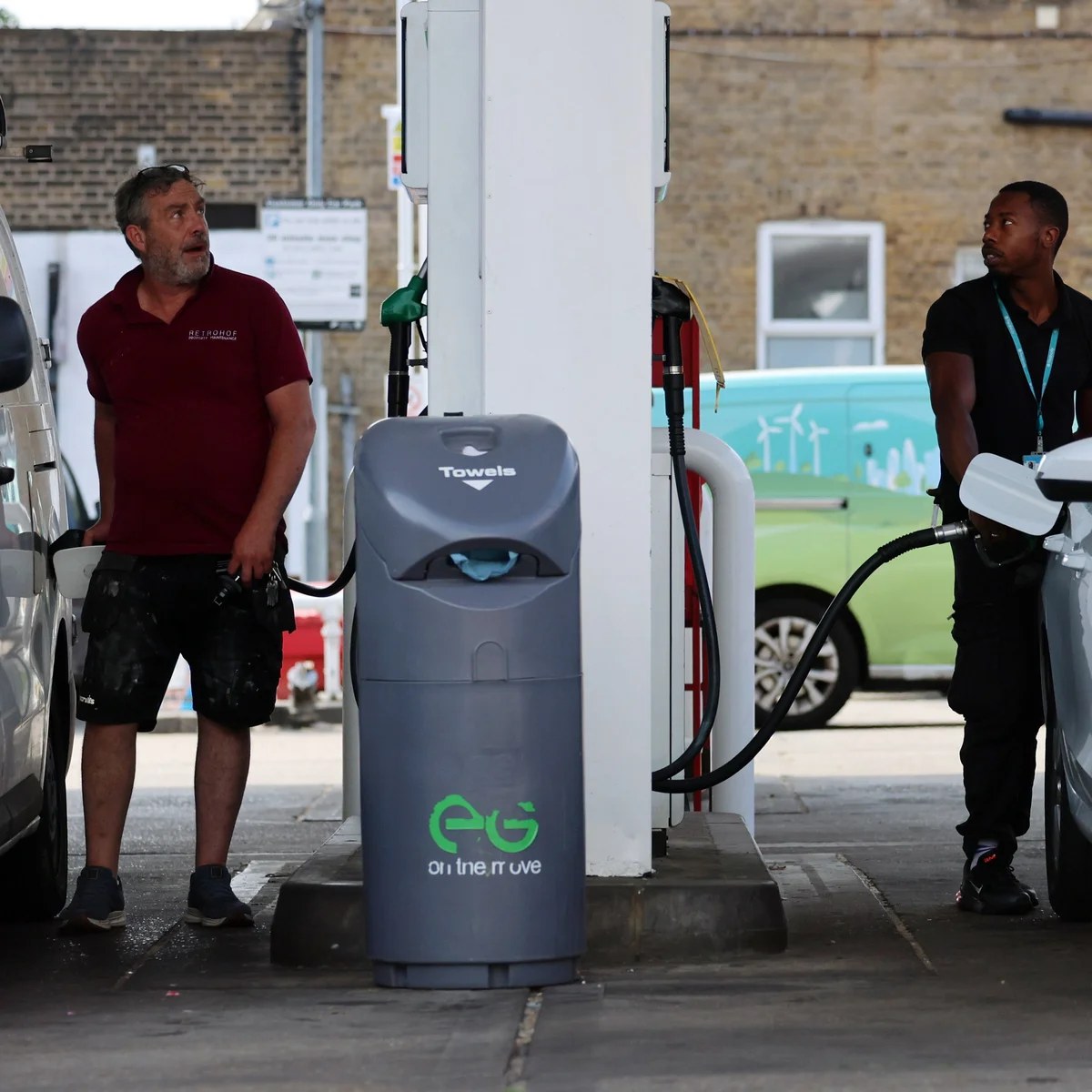
The Consumer Prices Index, which measures the cost of goods and services across the economy, has risen to 3.1% in the year to August, up from 2.9% in July.
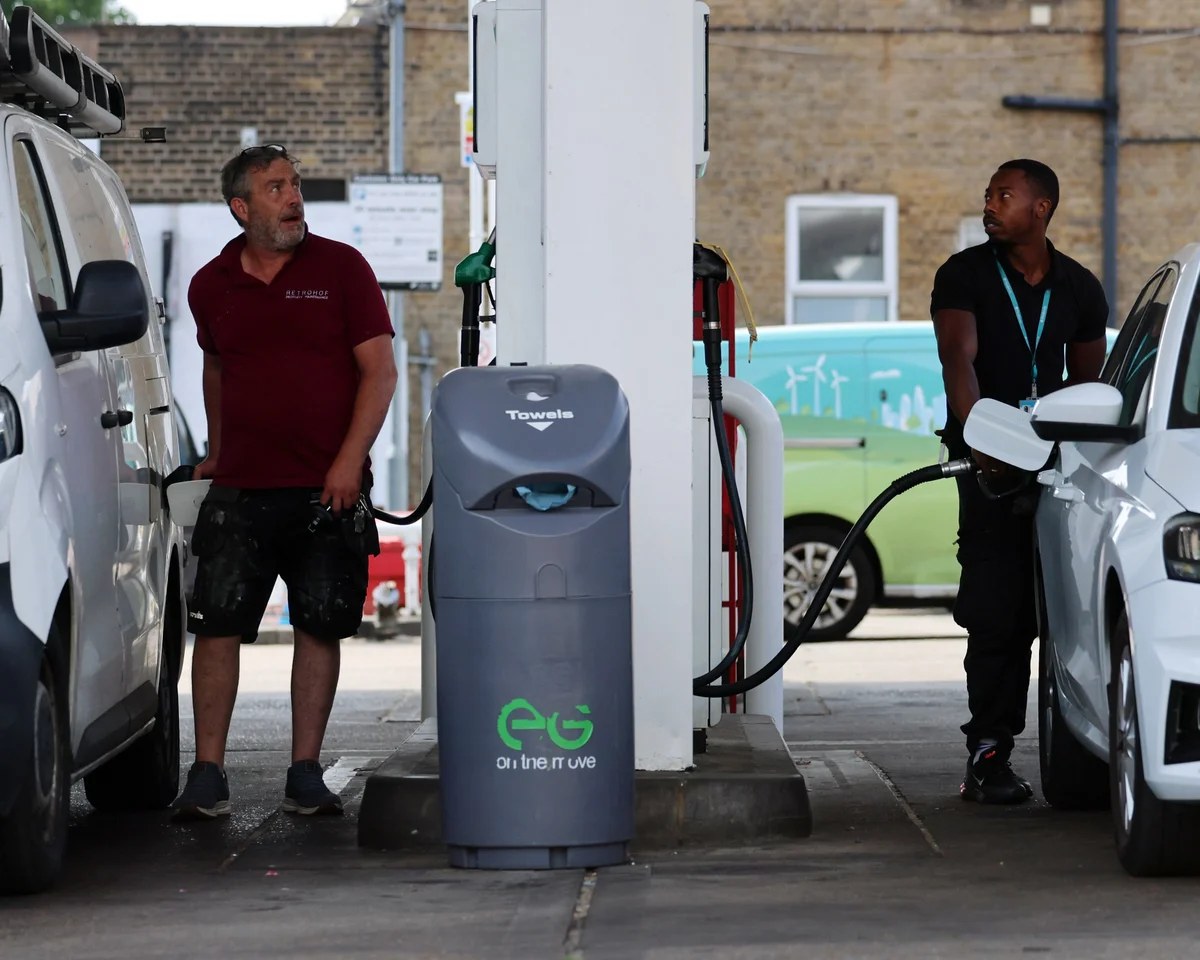
On a monthly basis, CPI rose by 0.5% in August, driven by “Transport, particularly motor fuels”, the Office for National Statistics says.
UK five-year fixed mortgage rates hit highest since November 2023
Fixed-rate mortgages in the UK have become even more expensive this morning.
Data provider MoneyFacts reports that the average five-year mortgate rate has risen to its highest since 8 November 2023, at 5.82%, up from 5.78% yesterday.
Shorter-term fixed loans are pricier too. The average two-year fixed residential mortgage rate is now 5.77%, the highest since 11 May.
“Mortgage borrowers are facing another unwelcome rate shock as the average five-year fix has hit 5.82% for the first time since November 2023.
Volatile swap rates have been forcing lenders to reprice, with major banks such as NatWest, Santander, HSBC, and Lloyds Bank all boosting rates for the second time since the start of September. For many borrowers, this is deeper than a headline rate, it could be the cost of their next mortgage and with inflation continuing to creep up, households’ budgets will be under pressure.”
Average London house price now £19,000 below its peak
House prices are continuing to drop in London.
The average property price in the capital fell by 3.3% year-on-year in July – the eleventh consecutive drop, and the lowest annual rate since January 2024.
The Office for National Statistics reports that “Inner London particularly affected” and that the average house price in London is now £19,000 below the recent peak in July 2025, at £569,000.
Overall, the average house price for England was £293,000 in July, up by 1.1% (£3,000) from a year earlier, the ONA reports.
UK rental inflation hits highest rate so far this year
The cost of renting a property in the UK has risen again, and at a faster rate.
The average UK monthly private rent increased by 3.8%, to £1,400, in the 12 months to August, new data from the Office for National Statistics shows,
That’s up from 3.7% in July, and the highest since last December.
Average rents increased to £1,459 (4.0%) in England, £846 (4.3%) in Wales, and £1,013 (1.1%) in Scotland, in the year to August.
Average rent was highest in London , at £2,332 a month, and lowest in the North East at £788 a month, in August.
The North East and North West had the highest rent annual inflation rate of all English regions, both at 5.8%, in the 12 months to August 2026. The North East’s annual rate was down from 6.3%, while the North West’s annual rate was up from 5.7%, in the 12 months to July 2026.
London’s annual inflation rate rose to 3.5% in the 12 months to August 2026, up from 3.0% in the 12 months to July 2026
Some industry figures have warned that the recently introduced Renters’ Rights Act, which bans no-fault evictions and gives tenants stronger rights, could lead to higher rents and landlords selling up.
Britian’s largest housebuilder has cut its construction plans for this year, in a blow to the government’s house-building targets.
BarrattRedrow announced this morning that it now plans to complete between 17,500 and 17,900 homes in the current financial year, down from a previous goal of 17,700-18,200.
It blamed “continued planning delays” for holding back its activities.
The company aso beat market expectations by reporting adjusted pre-tax profits of £572.8. for the year to 28 June.
Its shares have jumped over 8% in early trading, making Barratt the top riser on the FTSE 100 this morning.
The Bank of England isn’t only setting interest rates tomorrow.
The UK central bank is also deciding whether to slow – or even pause – its sale of government bonds bought after the financial crisis and during the Covid-19 pandemic.
Those sales, through a process called ‘quantitative tightening’, are controversial as a) they’re pushing up UK borrowing costs, and b) the Bank is making a loss on the process.
The City concensus forecast is that the Bank will slow its bond sales to £50bn a year, down from £70bn. It could even stop selling long-dated bonds altogether.
Professor CostasMilas of the UniversityofLiverpool suggests the Bank could even combine a QT change with a surprise rate hike tomorrow:
Today’s inflation reading raises the issue of whether the BoE’s policymakers need to raise interest rates tomorrow or wait for the next meeting in November.
If the Fed hikes today (a big if) despite Trump’s pressure to cut rates and given that the ECB also hiked, “passiveness” from the BoE would look (at best) strange.
What the BoE’s policymakers could do is raise interest rates tomorrow at the same time while pausing active Quantitative Tightening (the sale of government bonds). Pausing active sales of government bonds has been suggested by my co-author Christopher Mahon, senior fund manager at Columbia Threadneedle Investments, and a visiting fellow at the Open University Business School – see here for the details.
Such a double move (interest rate hike and pausing active sales of government bonds) would mean the front end of the yield curve goes higher but the back end would now be under much less stress... The point is that the BoE has options to pursue tomorrow.
The big danger is that disruption to oil supplies causes an “energy-driven economic shock”, warns George Lagarias, chief economist at Forvis Mazars.
And there’s very little the Bank of England can do to stop that, Lagarias explains:
“Inflation rose above 3%, in line, however with expectations. This is of little consequence. Inflation figures have once again become too backward-looking, even for central bank.
Oil and gasoline supply disruptions are growing by the day, even as global reserves are reaching a critical point. At this juncture, the risk isn’t a linear rise in inflation, but an energy-driven economic shock.
The central bank can do precious little about such supply-side disruptions, especially potential ones. Despite elevated rate expectations (4-5 hikes until mid-2027), the Bank of England should avoid looking at historic inflation data and think twice before taking action altogether. Supply shocks can push inflation up, but they can also meaningfully hurt growth, and that’s a potential decision that should be take later down the line and with more information.”
Rising inflation adds to the challenges facing John Healey as he prepares his first budget.
But the chancellor could be cheered by a peek at the bond markets today, where UK government borrowing costs are falling!
The yield, or interest rate, on short and long-dated UK debt are both dropping today. Ten-year gilt yields, which hit the highest since 2007 this week, are down 5 basis points (0.05 of a percentage point) at 5.35%.
This might indicate that the markets are a little less concerned about the outlook for UK inflation, as core CPI (which strips out food and energy) was unchanged at 2.6% in August.
Rising inflation will make life even tougher for those who are struggling to pay for essentials such as food and energy.
Edward Ware, head of influencing at the Money Advice Trust, the charity that runs National Debtline, says:
“Rising inflation will be yet another unwelcome worry for households already grappling with higher living costs. For people on tight budgets, even small increases in the cost of everyday essentials can make balancing their finances even harder.
“Every day at National Debtline, our advisers see the impact of the squeeze on household budgets, with almost half (46%) of the people we support not having enough money to cover their essential bills each month and two in five behind on their energy bills.
“With the continued squeeze on living costs and with energy bills set to rise in the coming weeks, it’s clear more support for households will be needed. The Government and Ofgem should press ahead with the energy Debt Relief Scheme for customers with unaffordable energy arrears, helping ensure historic debt does not become a permanent barrier to financial recovery.
“Anyone worried about their finances should seek free debt advice as early as possible. Getting help early can make a real difference and may help prevent financial difficulties from escalating.”
Looking further ahead, the financial markets are pricing in at least four UK interest rate rises by the end of 2027.
At one stage on Monday, the markets briefly priced in a rise to 5% (implying five quarter-point increases).
Susannah Streeter, chief investment strategist at Wealth Club, says:
The pressure on the Bank of England to raise rates is mounting, although a hold at 3.75% is still expected tomorrow.
The bigger shift is happening in expectations for the months ahead, with markets now pricing in multiple hikes as the energy shock threatens to keep inflation elevated. That is going to pile on the financial pain for those looking to remortgage or get onto the housing ladder.
With energy costs rising and borrowing costs looking set to surge higher, there looks set to be a fresh squeeze on spending, so consumers are going to become even choosier about where they spend their available cash.
The UK increasingly has a stagflationary flavour, warns analysts at Capital.com, saying:
Inflation is rising because of external energy and input-cost pressures at the same time as the domestic labour market and demand are weakening.
But, they add, a wage-price spiral does not appear to be developing, so the majority of Bank of England policymakers could continue to be patient and resist voting for a rate rise.
So while the Fed and ECB are moving towards tighter policy, the BoE arguably has a stronger domestic case for holding. The crucial distinction is between headline inflation and persistent domestic inflation.
If energy pushes CPI higher but wages, services inflation and employment continue cooling, hiking risks unnecessarily worsening the slowdown. If higher energy costs begin feeding into wages, services and expectations, however, the argument for joining the global tightening cycle becomes considerably stronger.
Many economists are predicting this morning that the Bank will vote to maintain Bank Rate at 3.75% at midday on Thursday, when it’s next monetary policy decision is due.
The latest money market pricing shows that a ‘no change’ decision is an 80% probability, with just a 20% chance that the Bank hikes rates to 4%.
The Bank’s remit is to keep inflation at 2% in the medium term, so policymakers won’t want to see CPI over 3%!
But…James Smith, developed markets economist at ING, says there is “very little sign” that the energy shock is broadening out to other parts of the inflation basket, writing:
Take food inflation, which slipped even lower in August to 1.1% year-on-year. Producer price data suggests this could actually go negative in the very near-term. That feels unlikely given the wider energy shock. But then again, fertiliser costs have retreated and so far, the sector is displaying signs of strong competition. In time we expect food inflation to rise as the full effect of the Iran war feeds through, but for now there’s little sign of that happening.
It’s a similar story when we look at goods and services the Office for National Statistics has previously defined as having ‘high’ or ‘very high’ energy intensity. This covers everything from fruit to air fares, to canteens. Even stripping out the distortion from last year’s water and car tax hike, the inflation rate for these energy intensive categories has actually fallen this year, That showed no sign of changing in August.
Thomas Pugh, chief economist at audit, tax and consulting firm RSM UK, predicts the Bank will hold rates this week, but might be forced to increase borrowing costs if inflation rises to 4%.
“While the MPC can take some comfort from the fact that services inflation stayed at 3.4%, the writing is on the wall for a much bigger move upwards in inflation later this year. The weak labour market data yesterday gives the MPC enough cover to keep interest rates on hold this Thursday but it feels more like “when” rather than “if” the Bank will eventually hike rates now if energy prices remain close to current levels.
“Indeed, looking ahead, inflation will probably rise to around 4% early next year as the supply chain impacts of higher oil prices, elevated agricultural prices and second-round effects start to be reflected in consumer prices. We doubt it will be until 2028 that inflation will get back to the 2% target.”
The UK has a worse inflation problem than the two largest eurozone economies
The UK’s CPI inflation rate of 3.1% was higher than the first (or “flash”) estimates of inflation for France (2.7%) and Germany (2.9%) in August, the ONS reports.
But the US is suffering even more, with an inflation rate of 3.4% in August.
City consultancy Capital Economics says there is a “striking lack of any strengthening in domestic inflation” in today’s CPI report.
The 6.9% m/m rise in fuel prices that pushed up fuel inflation from 15.3% to 23.0% and added 0.2ppts to CPI inflation was no surprise.
Instead, most striking was the absence of any obvious spillover from higher energy prices to other items. Core inflation stayed at 2.6% (consensus 2.6%, CE 2.5%) and services inflation remained at 3.4% (consensus 3.5%, CE 3.4%).
It’s still too early for any “second-round” inflation effects to show up, but it’s telling that there have been hardly any “first-round” inflation effects. For example, food & drink inflation stayed at 1.3%. And although airfares inflation nudged up from -11.6% to -8.0%, it remains below February’s +4.8%.
The ONS reports that the 12-month inflation rate for food and non-alcoholic beverages was 1.3% in August 2026, unchanged from July. It was last lower than this in September 2021.
Prices of chocolate confectionery rose by less than a year ago, while meat prices fell slightly in August.